
Periodontal and Gum Treatments
Our Services
Periodontal and Gum Treatments
- Are you suffering from bad breath?
- Do your gums bleed?
- Do you have loose teeth?
- Are you diabetic?
- Are you pregnant?
- Do you smoke/chew tobacco?
Healthy gums are the foundation of strong teeth.
GUM TREATMENTS:
– Scaling and root planing
– Laser gum therapy
– Treatment for bleeding gums
– Advanced gum surgeries
– Advanced periodontal care
Make your gums stronger and healthier to increase the longevity of your teeth.
Read More
What Is Gum Disease — And Why Does It Matter?
Gum disease (also called periodontal disease) is an infection of the tissues that hold your teeth in place. It’s caused primarily by plaque — the sticky film of bacteria that builds up on teeth when oral hygiene is inconsistent or incomplete.
It typically develops in stages:
Gingivitis — the early stage At this point, the gums become inflamed — red, swollen, and prone to bleeding when you brush or floss. The good news is that gingivitis is reversible with professional treatment and improved home care. The bone and connective tissue holding the teeth in place haven’t been affected yet.
Periodontitis — the advanced stage If gingivitis isn’t addressed, it can progress into periodontitis. At this stage, the infection moves deeper — affecting the bone and tissue that support your teeth. Pockets form between the teeth and gums, bacteria accumulate further, and without treatment, teeth can become loose or may eventually need to be removed.
The most important thing to understand about gum disease is this: it rarely causes significant pain in its early stages. Many people don’t realise they have it until it’s already progressed. Regular check-ups and professional gum assessments are how we catch it early — before it becomes a complex problem.
When Should You See a Dentist About Your Gums?
Your gums communicate more than you might think. Here are signs that something may be off and that professional gum treatment could be exactly what you need:
• Bleeding gums — especially when brushing or flossing. This is one of the earliest and most common signs of gum inflammation.
• Red, swollen, or tender gums — healthy gums should be firm and pale pink, not puffy or dark red.
• Persistent bad breath — not the kind that goes away after brushing. Chronic bad breath can be a sign of bacterial activity deep in the gum tissue.
• Receding gums — if your teeth look longer than they used to, or if you can see more of the root, your gums may be pulling back.
• Sensitivity near the gumline — exposed roots from receding gums often cause heightened sensitivity to hot, cold, or sweet foods.
• Teeth feeling loose — in advanced gum disease, the supporting bone can deteriorate enough that teeth become mobile.
• Gaps appearing between teeth — shifting teeth can be a sign of bone and tissue loss.
• Pus between teeth and gums — a clear sign of active infection that needs prompt attention.
If you’re experiencing any of these, don’t wait. Professional gum treatment in Kothrud is available, and the earlier you come in, the simpler the path to healthy gums.
What to Expect When You Come In for Gum Treatment
We believe informed patients are comfortable patients. Here’s a clear picture of what your journey with us looks like:
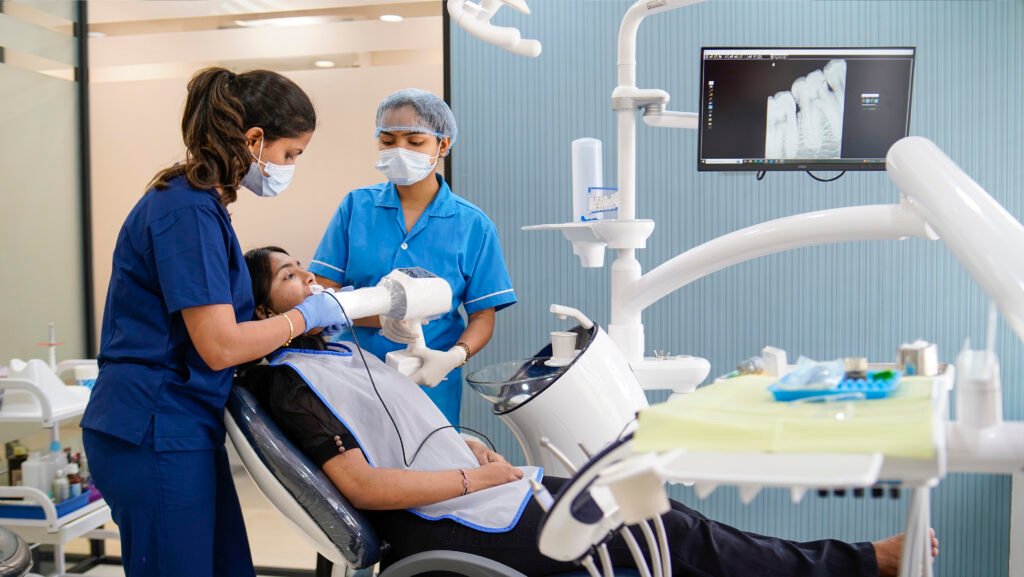
First Visit — Assessment We carry out a full periodontal examination, take necessary X-rays, and discuss your symptoms, concerns, and medical history. You’ll leave this appointment with a clear understanding of the state of your gum health and a recommended treatment plan.
Treatment Appointments Depending on the severity of your condition, treatment may be completed in one session or across multiple appointments — working on different sections of the mouth at a time. We ensure you’re comfortable throughout, with local anaesthesia used as needed.
Review Appointment After your initial treatment, we schedule a review to assess how your gums have responded and whether any further treatment is needed. Most patients see meaningful improvement at this stage.
Ongoing Maintenance We’ll recommend a maintenance schedule tailored to you — whether that’s every three months or every six — to keep your gum health on track long-term.
What Is Gum Disease — And Why Does It Matter?
Gum disease (also called periodontal disease) is an infection of the tissues that hold your teeth in place. It’s caused primarily by plaque — the sticky film of bacteria that builds up on teeth when oral hygiene is inconsistent or incomplete.
It typically develops in stages:
Gingivitis — the early stage At this point, the gums become inflamed — red, swollen, and prone to bleeding when you brush or floss. The good news is that gingivitis is reversible with professional treatment and improved home care. The bone and connective tissue holding the teeth in place haven’t been affected yet.
Periodontitis — the advanced stage If gingivitis isn’t addressed, it can progress into periodontitis. At this stage, the infection moves deeper — affecting the bone and tissue that support your teeth. Pockets form between the teeth and gums, bacteria accumulate further, and without treatment, teeth can become loose or may eventually need to be removed.
The most important thing to understand about gum disease is this: it rarely causes significant pain in its early stages. Many people don’t realise they have it until it’s already progressed. Regular check-ups and professional gum assessments are how we catch it early — before it becomes a complex problem.
When Should You See a Dentist About Your Gums?
Your gums communicate more than you might think. Here are signs that something may be off and that professional gum treatment could be exactly what you need:
• Bleeding gums — especially when brushing or flossing. This is one of the earliest and most common signs of gum inflammation.
• Red, swollen, or tender gums — healthy gums should be firm and pale pink, not puffy or dark red.
• Persistent bad breath — not the kind that goes away after brushing. Chronic bad breath can be a sign of bacterial activity deep in the gum tissue.
• Receding gums — if your teeth look longer than they used to, or if you can see more of the root, your gums may be pulling back.
• Sensitivity near the gumline — exposed roots from receding gums often cause heightened sensitivity to hot, cold, or sweet foods.
• Teeth feeling loose — in advanced gum disease, the supporting bone can deteriorate enough that teeth become mobile.
• Gaps appearing between teeth — shifting teeth can be a sign of bone and tissue loss.
• Pus between teeth and gums — a clear sign of active infection that needs prompt attention.
If you’re experiencing any of these, don’t wait. Professional gum treatment in Kothrud is available, and the earlier you come in, the simpler the path to healthy gums.
What to Expect When You Come In for Gum Treatment
We believe informed patients are comfortable patients. Here’s a clear picture of what your journey with us looks like:
First Visit — Assessment We carry out a full periodontal examination, take necessary X-rays, and discuss your symptoms, concerns, and medical history. You’ll leave this appointment with a clear understanding of the state of your gum health and a recommended treatment plan.
Treatment Appointments Depending on the severity of your condition, treatment may be completed in one session or across multiple appointments — working on different sections of the mouth at a time. We ensure you’re comfortable throughout, with local anaesthesia used as needed.
Review Appointment After your initial treatment, we schedule a review to assess how your gums have responded and whether any further treatment is needed. Most patients see meaningful improvement at this stage.
Ongoing Maintenance We’ll recommend a maintenance schedule tailored to you — whether that’s every three months or every six — to keep your gum health on track long-term.