
Orthodontics
Our Services
Orthodontics
- Are you unhappy with your natural smile?
- Do you have crooked teeth?
- Did you miss correcting your teeth alignment in your teenage?
- Do you have an awkward smile?
- Did you undergo previously failed orthodontic treatment?
Correct your crooked teeth and bite issues at any age with advanced orthodontic solutions.
ORTHODONTIC TREATMENTS:
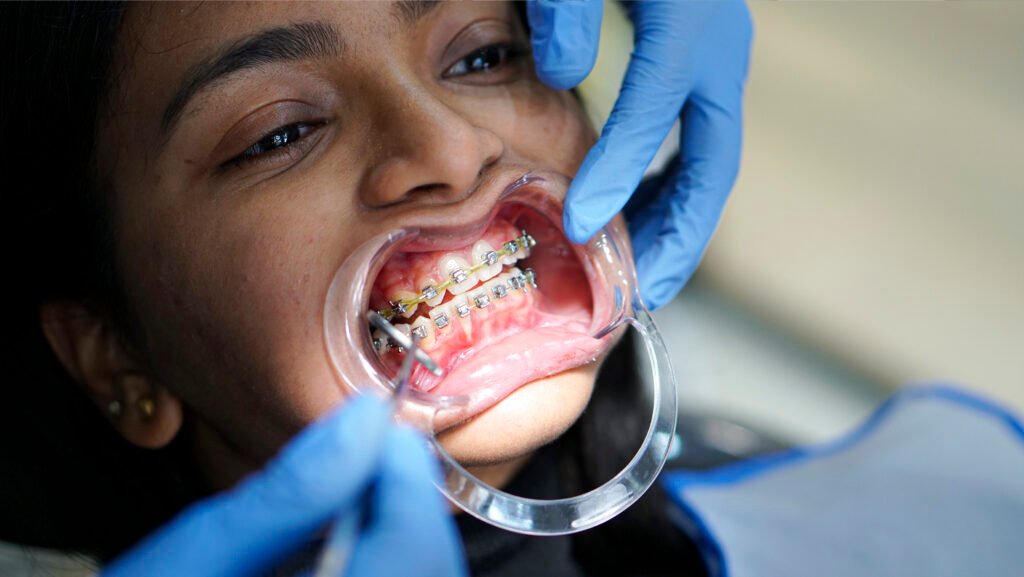
– Metal braces
– Ceramic braces
– Self-ligating braces
– Clear aligners (invisible braces)
Aligned teeth provide more efficiency both functionally and aesthetically preventing long term dental bite problems.
Read More
What Does Orthodontic Treatment Actually Involve?
Orthodontics is the branch of dentistry that focuses on diagnosing and correcting misaligned teeth and jaws. Using carefully applied, controlled forces — through braces, aligners, or other appliances — orthodontic treatment gradually moves teeth into their correct positions over time.
The result isn’t just a straighter smile. Properly aligned teeth:
• Are easier to brush and floss effectively, reducing the risk of decay and gum disease
• Distribute biting forces more evenly, reducing wear on individual teeth
• Can improve jaw function and reduce strain on the jaw joints
• Often improve the overall balance and proportion of the face
• Have a genuine positive impact on confidence and self-esteem
Orthodontic treatment works at any age — though the approach and timeline may differ between children, teenagers, and adults. What matters most is having a thorough assessment and a treatment plan built around your specific situation.
What Conditions Does Orthodontic Treatment Address?
You might benefit from orthodontic treatment if you have any of the following:
Crowding When there isn’t enough space in the jaw for all the teeth to sit comfortably, they overlap, rotate, or push in front of or behind one another. Crowding makes proper cleaning difficult and increases the risk of decay and gum problems.
Spacing & Gaps Gaps between teeth can occur due to missing teeth, teeth that are smaller than average, or a jaw that has more space than the teeth need. Beyond aesthetics, gaps can allow neighbouring teeth to drift and affect bite function.
Overbite When the upper front teeth overlap significantly over the lower front teeth vertically. A deep overbite can cause wear on the lower teeth and sometimes jaw discomfort.
Underbite When the lower teeth sit in front of the upper teeth. This can affect chewing function and, in some cases, jaw development.
Crossbite When some upper teeth sit inside the lower teeth rather than outside them. A crossbite can cause uneven wear and jaw asymmetry over time.
Open Bite When the upper and lower front teeth don’t meet when the mouth is closed. This can make biting into food difficult and affect speech clarity.
Protruding Teeth Upper front teeth that sit too far forward. Beyond aesthetics, protruding teeth can be more vulnerable to injury.
Midline Discrepancy When the centre of the upper and lower teeth don’t line up — often a sign of a bite issue that benefits from correction.
If you recognise any of these in yourself or your child, an orthodontic consultation is the right starting point
Is It Too Late for Orthodontic Treatment as an Adult?
Not at all. Adult orthodontics is increasingly common — and there’s no upper age limit for straightening teeth, provided your teeth and gums are healthy.
Adults often seek orthodontic treatment because:
• They had braces as a teenager but their teeth shifted after retainer wear lapsed
• They never had the opportunity for orthodontic treatment growing up
• They’ve completed other dental work and want to optimise their bite or smile
• They’re finally at a stage in life where they want to invest in themselves
We see adult patients across a wide age range at our Kothrud clinic. The approach is exactly the same — a thorough assessment, honest options, and a treatment plan built around your life.
One thing to note: in adults, tooth movement can sometimes be slightly slower than in growing patients, and the treatment plan needs to account for any existing dental work. We factor all of this in from the start.
What Does Orthodontic Treatment Actually Involve?
Orthodontics is the branch of dentistry that focuses on diagnosing and correcting misaligned teeth and jaws. Using carefully applied, controlled forces — through braces, aligners, or other appliances — orthodontic treatment gradually moves teeth into their correct positions over time.
The result isn’t just a straighter smile. Properly aligned teeth:
• Are easier to brush and floss effectively, reducing the risk of decay and gum disease
• Distribute biting forces more evenly, reducing wear on individual teeth
• Can improve jaw function and reduce strain on the jaw joints
• Often improve the overall balance and proportion of the face
• Have a genuine positive impact on confidence and self-esteem
Orthodontic treatment works at any age — though the approach and timeline may differ between children, teenagers, and adults. What matters most is having a thorough assessment and a treatment plan built around your specific situation.
What Conditions Does Orthodontic Treatment Address?
You might benefit from orthodontic treatment if you have any of the following:
Crowding When there isn’t enough space in the jaw for all the teeth to sit comfortably, they overlap, rotate, or push in front of or behind one another. Crowding makes proper cleaning difficult and increases the risk of decay and gum problems.
Spacing & Gaps Gaps between teeth can occur due to missing teeth, teeth that are smaller than average, or a jaw that has more space than the teeth need. Beyond aesthetics, gaps can allow neighbouring teeth to drift and affect bite function.
Overbite When the upper front teeth overlap significantly over the lower front teeth vertically. A deep overbite can cause wear on the lower teeth and sometimes jaw discomfort.
Underbite When the lower teeth sit in front of the upper teeth. This can affect chewing function and, in some cases, jaw development.
Crossbite When some upper teeth sit inside the lower teeth rather than outside them. A crossbite can cause uneven wear and jaw asymmetry over time.
Open Bite When the upper and lower front teeth don’t meet when the mouth is closed. This can make biting into food difficult and affect speech clarity.
Protruding Teeth Upper front teeth that sit too far forward. Beyond aesthetics, protruding teeth can be more vulnerable to injury.
Midline Discrepancy When the centre of the upper and lower teeth don’t line up — often a sign of a bite issue that benefits from correction.
If you recognise any of these in yourself or your child, an orthodontic consultation is the right starting point
Is It Too Late for Orthodontic Treatment as an Adult?
Not at all. Adult orthodontics is increasingly common — and there’s no upper age limit for straightening teeth, provided your teeth and gums are healthy.
Adults often seek orthodontic treatment because:
• They had braces as a teenager but their teeth shifted after retainer wear lapsed
• They never had the opportunity for orthodontic treatment growing up
• They’ve completed other dental work and want to optimise their bite or smile
• They’re finally at a stage in life where they want to invest in themselves
We see adult patients across a wide age range at our Kothrud clinic. The approach is exactly the same — a thorough assessment, honest options, and a treatment plan built around your life.
One thing to note: in adults, tooth movement can sometimes be slightly slower than in growing patients, and the treatment plan needs to account for any existing dental work. We factor all of this in from the start.